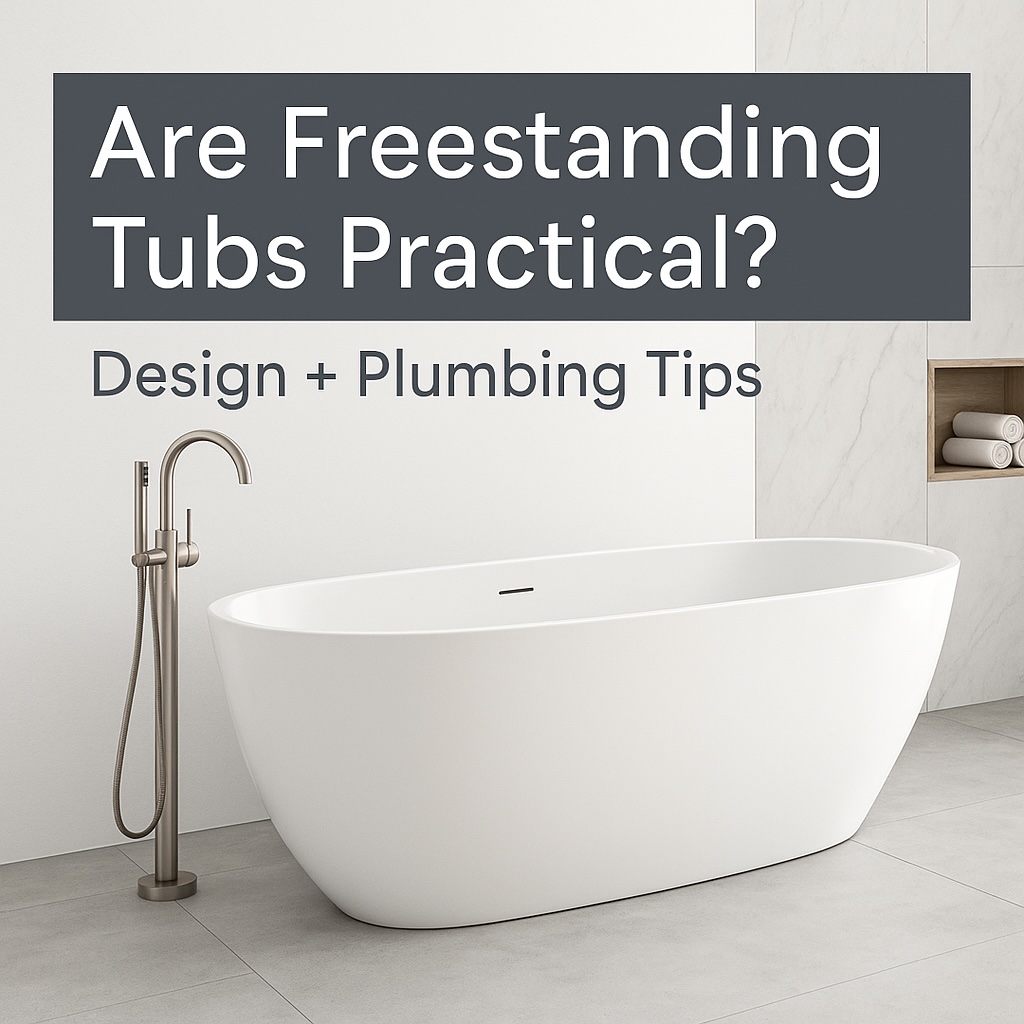
Are Freestanding Tubs Practical?
Design + Plumbing Tips You Should Know
Freestanding tubs are one of the most eye-catching features in modern bathroom design. They instantly elevate a space and create a spa-like focal point — but many homeowners still ask the same question:
Are freestanding tubs actually practical?
The answer is yes — when planned correctly. Below, we break down the real-world pros, potential challenges, and essential plumbing tips to help you decide if a freestanding tub is right for your bathroom.
???? 1️⃣ What Makes Freestanding Tubs So Popular?
Freestanding tubs are no longer limited to luxury hotels. Today’s designs offer a balance of comfort, durability, and modern engineering.
Why homeowners love them:
-
Statement piece that elevates bathroom design
-
Works with modern, transitional, and classic styles
-
Available in compact sizes for standard bathrooms
-
Pairs beautifully with floor-mount tub fillers
✅ 2️⃣ Are Freestanding Tubs Practical for Everyday Use?
Yes — but practicality depends on space, layout, and tub selection.
They’re practical if:
-
You have at least 6–8 inches of clearance around the tub
-
The tub is used mainly for soaking, not daily showers
-
You choose a comfortable interior depth and slope
They may not be ideal if:
-
Your bathroom is extremely small
-
You rely on a tub-shower combo
-
Storage space is already limited
???? In many homes, freestanding tubs work best in primary bathrooms rather than guest baths.
???? 3️⃣ Space & Layout Considerations
Contrary to popular belief, freestanding tubs don’t always require a massive bathroom.
Typical tub sizes:
-
Compact: 55″–59″ (great for standard homes)
-
Standard: 60″–67″
-
Oversized: 70″+ (spa or luxury bathrooms)
Placement tips:
-
Centered under a window for a dramatic look
-
Offset against a wall (still counts as freestanding)
-
Paired with wall-mounted or floor-mounted fillers
???? 4️⃣ Plumbing Requirements (What to Plan Ahead)
Plumbing is the most important factor in freestanding tub practicality.
Drain Location
-
Most tubs require floor-mounted drains
-
Center or end drain options available
-
Floor must be prepped before tile installation
Faucet Options
-
Floor-mounted tub fillers (most popular)
-
Wall-mounted fillers (if tub is near a wall)
-
Some tubs allow deck-mounted fillers
Pro tip: Always confirm faucet reach and tub height before purchasing.
???? 5️⃣ Installation & Maintenance
Modern freestanding tubs are easier to maintain than older designs.
Maintenance advantages:
-
Easy access for cleaning around the tub
-
No caulking against walls on all sides
-
Durable materials resist staining and cracking
Installation notes:
-
Professional installation strongly recommended
-
Floor reinforcement may be needed for heavier tubs
-
Acrylic tubs are lighter and easier to install than stone or cast iron
???? 6️⃣ Comfort & Heat Retention
Not all freestanding tubs are created equal.
Most comfortable materials:
-
Acrylic (lightweight, warm to the touch)
-
Solid surface (excellent heat retention)
-
Stone resin (luxury feel with durability)
Look for:
-
Sloped backrests
-
Ergonomic interior curves
-
Deeper soaking depth (14″–16″ water depth)
???? 7️⃣ Are Freestanding Tubs Worth the Investment?
For many homeowners, yes.
They add value by:
-
Increasing resale appeal
-
Elevating bathroom design instantly
-
Creating a spa-like experience at home
When paired with the right vanity, lighting, and fixtures, freestanding tubs become a long-term design upgrade, not just a trend.
✨ Final Verdict
Freestanding tubs are practical when planned correctly. With proper space, smart plumbing preparation, and the right tub style, they offer both luxury and everyday usability.
If you’re designing a primary bathroom or planning a high-end remodel, a freestanding tub can be one of the most rewarding upgrades you make.
???? Shop Freestanding Tubs at Anve Kitchen & Bath
Explore modern soaking tubs, tub fillers, and complete bath solutions.
???? Visit Our Showroom in New Jersey
???? Shop Online at AnveKitchenAndBath.com
???? Expert Design & Plumbing Guidance Available